

Depression is more serious than many people realize. Major depressive disorder affects millions of American adults each year and can interfere with a person’s thoughts, behavior, mood, physical health, work, relationships, and ability to enjoy daily life.
Depression by the Numbers
Depression has a significant impact across the United States:
-
More than 16 million American adults experience major depressive disorder each year.
-
More than 16 million American adults experience major depressive disorder each year.
-
$210 billion was the estimated economic burden of depression in the United States in 2010.
-
Depression is the second leading cause of disability, accounting for almost 20% of all years of life lost to disability and premature death.
-
More than 49,000 people die by suicide in the United States each year.
-
60% of people who die by suicide are estimated to have suffered from depression.
-
More than 4 million patients do not receive adequate relief from antidepressants or cannot tolerate their side effects.
-
About two-thirds of people who experience one episode of depression will have at least one additional episode in their lifetime.
These statistics show how common, serious, and far-reaching depression can be. They also highlight why it is important for patients to understand their symptoms and know that treatment options are available.
Symptoms of Clinical Depression
Clinical depression can involve more than sadness. Someone may want to seek medical help if they experience a depressed mood for more than two weeks, along with four or more of the following symptoms:
-
Significant increase or decrease in appetite
-
Excessive sleepiness or insomnia
-
Agitation or restlessness
-
Fatigue or loss of energy nearly every day
-
Feelings of worthlessness or excessive guilt nearly every day
-
Difficulty thinking, concentrating, or making decisions
-
Recurrent thoughts of death or suicide
What Causes Depression?
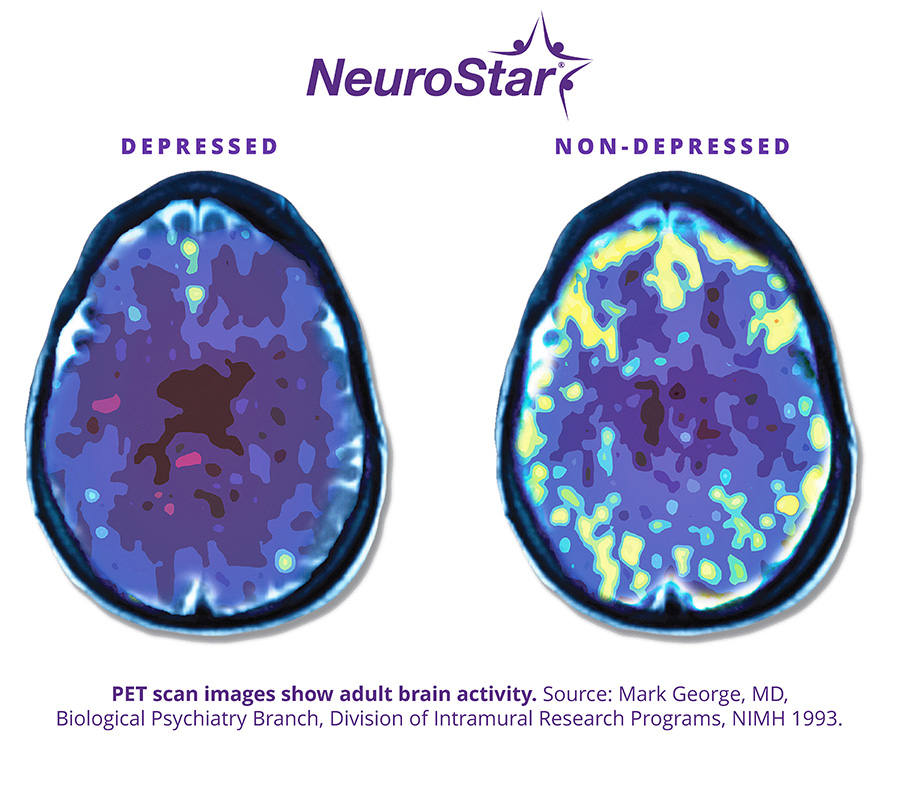
The exact cause of depression is not fully known. Current scientific understanding points to changes in brain activity, particularly in neural networks that regulate emotion and motivation. Neurotransmitters, which are chemical messengers that send signals between brain cells, also play an important role.
A person’s genetics, life history, stress levels, physical health, and brain chemistry may all contribute to their risk of developing depression. Because depression can have many contributing factors, treatment needs may vary from person to person.

Depression Treatment Options
Depression is most often treated with antidepressant medications. These medications are believed to work by increasing levels of certain neurotransmitters in the brain, which may help reactivate or support neural networks involved in mood regulation.
However, medication is not the only treatment option. More than 4 million patients do not receive adequate relief from antidepressants or cannot tolerate their side effects. For these patients, another approach may be needed.
Apollo TMS Therapy offers a non-invasive treatment option for people with depression, including those who cannot take medication due to side effects. TMS therapy uses targeted magnetic pulses to stimulate brain regions involved in mood regulation. It does not require medication, surgery, or anesthesia.
Frequently Asked Questions
Major depressive disorder is a condition that lasts two or more weeks and interferes with a person’s ability to carry out daily tasks or enjoy activities that previously brought pleasure. It affects approximately 16 million American adults each year.
Depression affects about 6.7% of US adults each year. It is one of the most common mental health conditions and a major cause of disability.
Yes. Depression can interfere with normal functioning and cause pain and suffering for the person experiencing it as well as those close to them. Serious depression can negatively affect family life, work, relationships, and overall health. In some cases, it can also increase the risk of suicide.
There is no known cure for depression, but many people can experience significant symptom relief with proper treatment. Some patients may remain symptom-free for long periods.
Some people do not get enough relief from antidepressants or cannot tolerate their side effects. In these cases, other treatment options, such as TMS therapy, may be considered.
References
-
Center for Behavioral Health Statistics and Quality. (2016). 2015 National Survey on Drug Use and Health: Detailed Tables. Substance Abuse and Mental Health Services Administration, Rockville, MD.
-
Greenberg PE, et al. The Economic Burden of Adults With Major Depressive Disorder in the United States (2005 and 2010). J Clin Psychiatry. 2015;76(2):155-162.
-
US Burden of Disease Collaborators. The state of US health, 1990-2010: burden of diseases, injuries, and risk factors. JAMA. 2013;310(6):591-608.
-
Arias E, Heron M, Xu JQ. United States life tables, 2012. National Vital Statistics Reports. 2016;65(8).
-
Courtet P, Lopez-Castroman J. Antidepressants and suicide risk in depression. World Psychiatry. 2017;16:317-318.
-
Martin LA, Neighbors HW, Griffith DM. The Experience of Symptoms of Depression in Men vs Women: Analysis of the National Comorbidity Survey Replication. JAMA Psychiatry. 2013;70(10):1100-1106.