
Red Light Therapy
What is it?
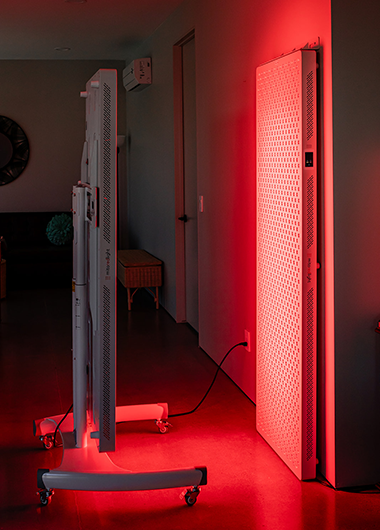
Red light therapy is a non invasive, drug free treatment that uses specific red and near infrared wavelengths to stimulate cellular energy production, reduce inflammation, and support natural repair processes throughout the body and brain. It is commonly used to support mood, cognitive function, circulation, and neurological health.
This service will be available at our Richmond Hill location starting in January, with additional locations planned for 2026.

What are the benefits?
Non-invasive & drug-free: Alternative for patients sensitive to medications
Mood improvement: Evidence of reduced depressive symptoms within weeks.
Enhanced cognition: Supports memory, processing speed, and executive function.
Neuroprotection & repair: Improved blood flow, mitochondrial function, and neuroplasticity.
Low risk & well tolerated: Minimal side effects compared to pharmacologic options.
This treatment is not currently approved by the FDA. It has nevertheless been the focus of substantial clinical study, and the available research indicates promising therapeutic potential. In addition to published findings, many patients and clinicians have reported positive experiences that further support its use in appropriate clinical settings.
Cellular Activation by Red Light
Light Penetration
Red light enters the cell
Mitochondrial Activation
Mitochondria absorbs light
Cellular Energy Boost
ATP production increases enhancing cellular repair
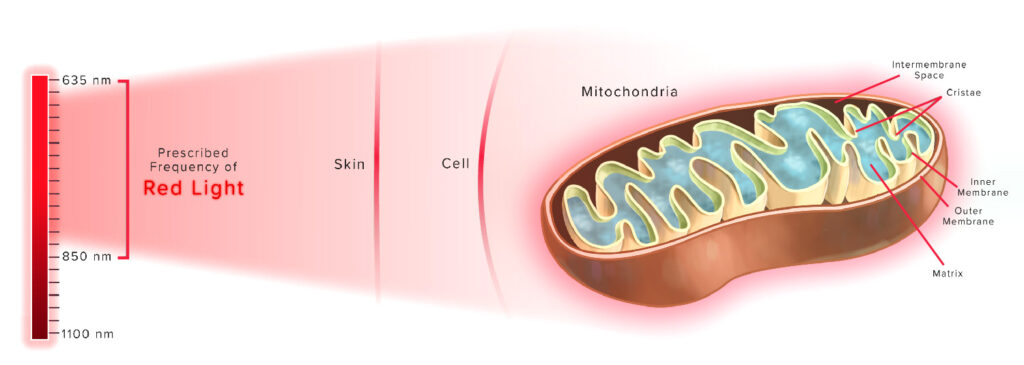
The Red Light Therapy utilized red and near-infrared light to stimulate mitochondrial function ramping up the body’s natural healing and rejuvenation mechanisms
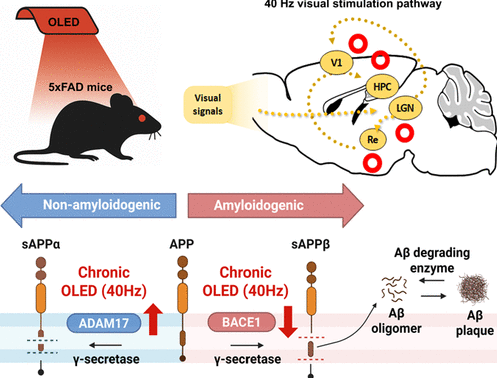
Red Light Therapy for Alzheimer’s
Researchers tested whether different colors of light affected Alzheimer’s disease progression. In these studies, Alzheimer’s model mice were exposed to white light, red light, green light, and blue light. Only red light consistently reduced beta amyloid plaque buildup and improved cognitive performance. Green and blue light showed no cognitive benefit and no plaque reduction.
These findings suggest that red and near infrared light may help the brain clear toxic proteins, reduce inflammation, and support healthier neuronal function. Because the brain is highly dependent on mitochondrial energy, red and near infrared wavelengths appear to support normal cellular activity, while isolated blue light may contribute to cellular stress.
This research also supports the idea that Alzheimer’s disease is closely tied to mitochondrial and circadian disruption, influenced by modern indoor lighting and screen exposure that lack natural red and near infrared light.
Clinical Evidence
For Depression
Cassano P, et al. (2015)
Near-Infrared Transcranial Photobiomodulation for Major Depressive Disorder: Proof of Concept Study.
Findings: Four weekly PBM sessions significantly improved depression scores in patients with major depressive disorder.
Reference: Brain Stimulation. 2015;8(2):346–354. doi:10.1016/j.brs.2014.11.012
Salehpour F, et al. (2018)
Transcranial Photobiomodulation for the Treatment of Major Depressive Disorder: A Review of Clinical Evidence and Neurobiological Mechanisms.
Findings: PBM enhances mitochondrial function, increases neurotrophic factors, and improves cerebral blood flow, supporting mood regulation.
Reference: Neurophotonics. 2018;5(1):011015. doi:10.1117/1.NPh.5.1.011015
For Cognitive Impairment
Saltmarche AE, et al. (2017)
Significant Improvement in Cognition in Mild to Moderately Severe Dementia Cases Treated with Transcranial Plus Intranasal Photobiomodulation.
Findings: Twelve weeks of PBM improved memory and executive function in dementia patients.
Reference: Photomed Laser Surg. 2017;35(8):432–441. doi:10.1089/pho.2016.4227
Chao LL (2019)
Effects of Transcranial Laser Photobiomodulation on Working Memory in Healthy Subjects.
Findings: PBM enhanced working memory and processing speed in healthy adults.
Reference: Photobiomodulation, Photomedicine, and Laser Surgery. 2019;37(1):44–50. doi:10.1089/photob.2018.4521
Hamblin MR (2019)
Shining Light on the Head: Photobiomodulation for Brain Disorders.
Findings: Reviews demonstrate PBM benefits in traumatic brain injury, stroke, age-related cognitive decline, and mood disorders.
Reference: BBA Clinical. 2016;6:113–124. doi:10.1016/j.bbacli.2016.09.002
Interested in Red Light Therapy?
If you want to explore whether red light therapy may be a good fit for your needs, our team can provide guidance and answer any questions. We can walk you through how the treatment works, what to expect, and how it may support your goals. Contact us to learn more or to schedule an appointment.